




The grid bends to the weather.
Solar and wind now meet a third of India's daytime load. A 20% forecast error is a blackout — or a billion units of curtailment.
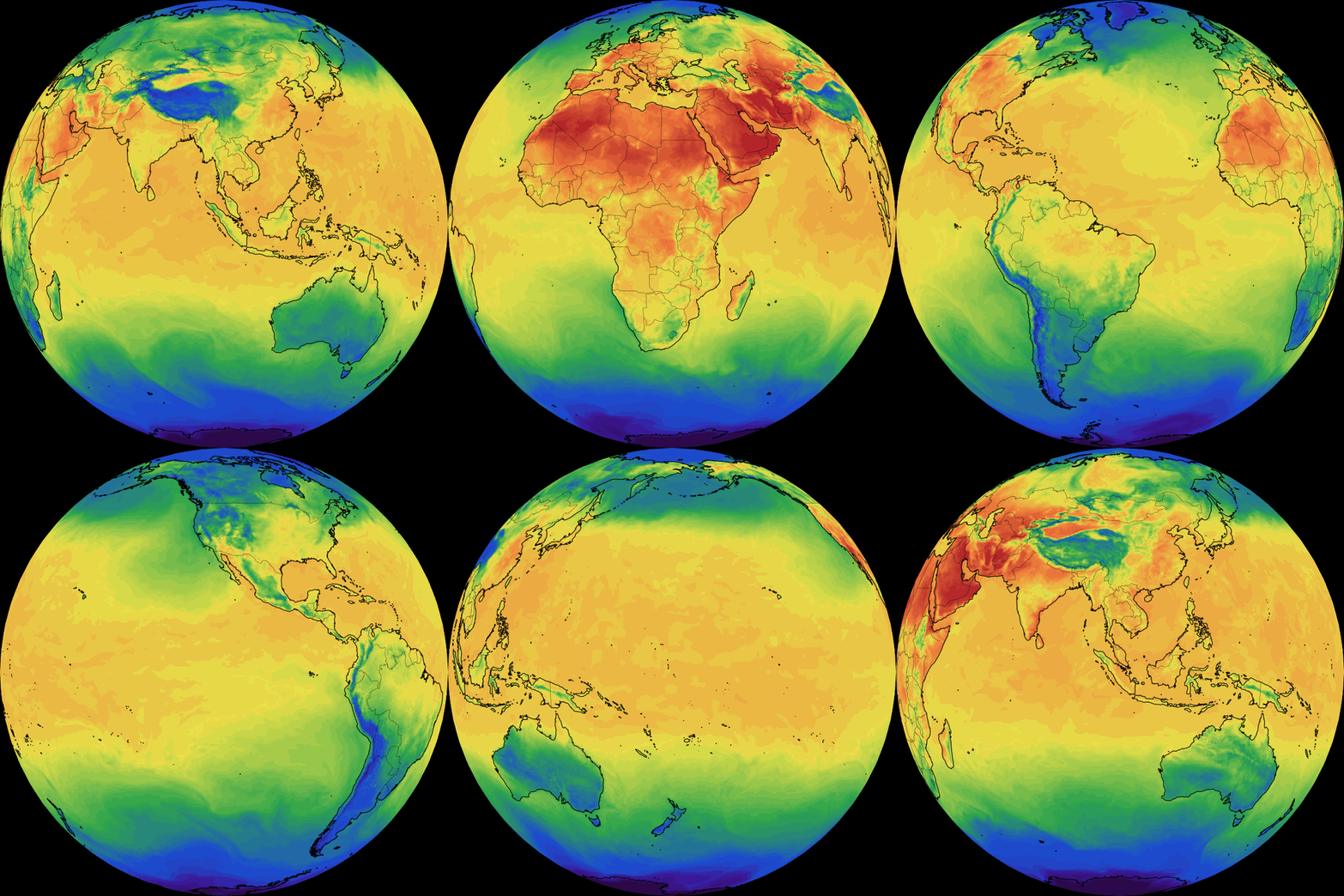
Weather impacts everyone on Earth. Accurate forecasts do not. Indus is building AI weather systems for the regions where the observation gap is widest and the climate stakes are highest — India, Africa, Latin America.
Built by engineers, scientists and researchers from
Two-thirds of humanity lives in places where climate intelligence and weather forecasts are least accurate.
This is not a limit of physics — it is a limit of data.
Four sectors.
One climate system we barely see.
Solar and wind now meet a third of India's daytime load. A 20% forecast error is a blackout — or a billion units of curtailment.
Sowing windows, irrigation calls, crop insurance — all priced on rainfall the farmer cannot see coming.
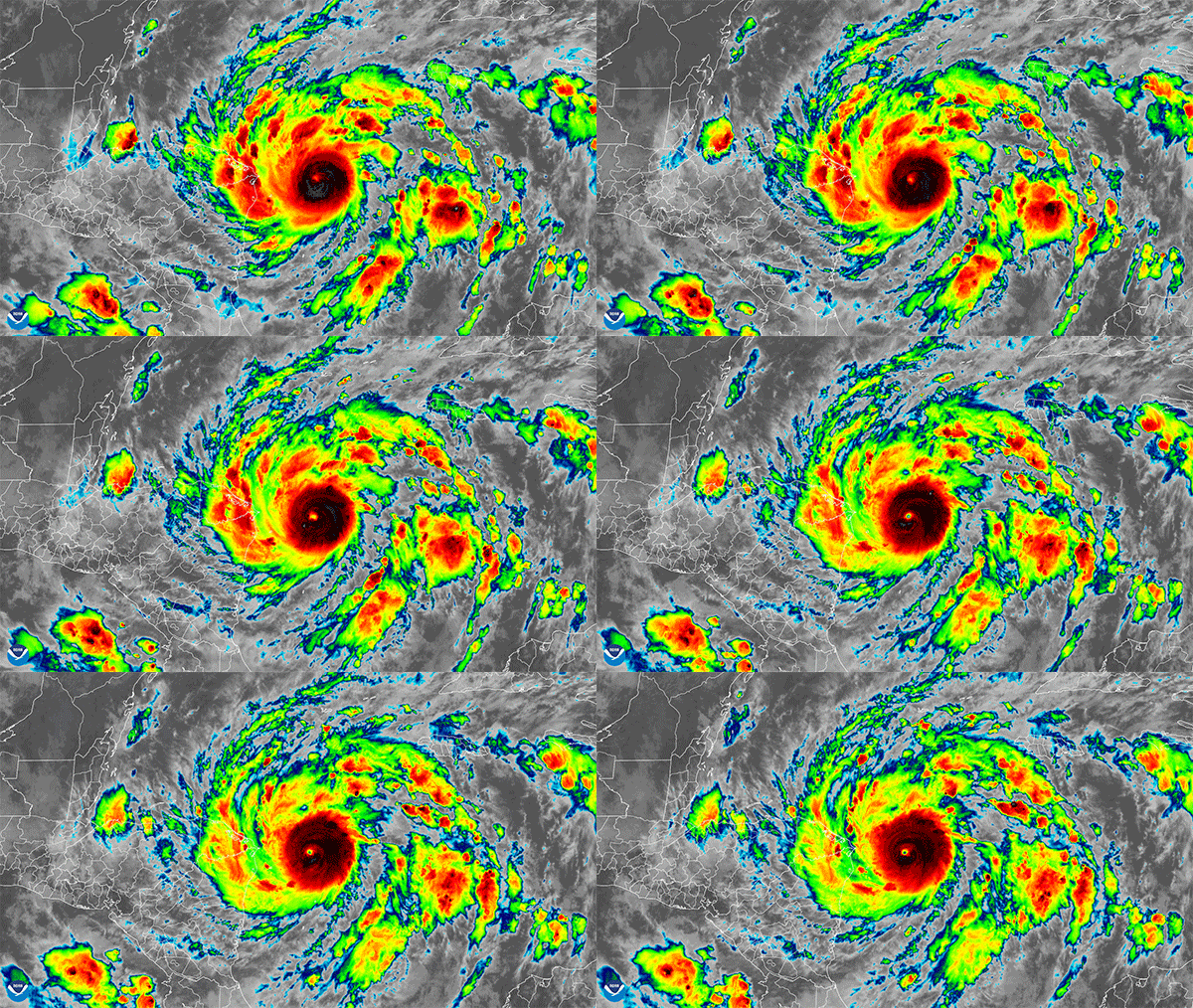
Cyclone landfall, flash floods, glacial lake outbursts. Early warning saves lives when the forecast arrives in time.
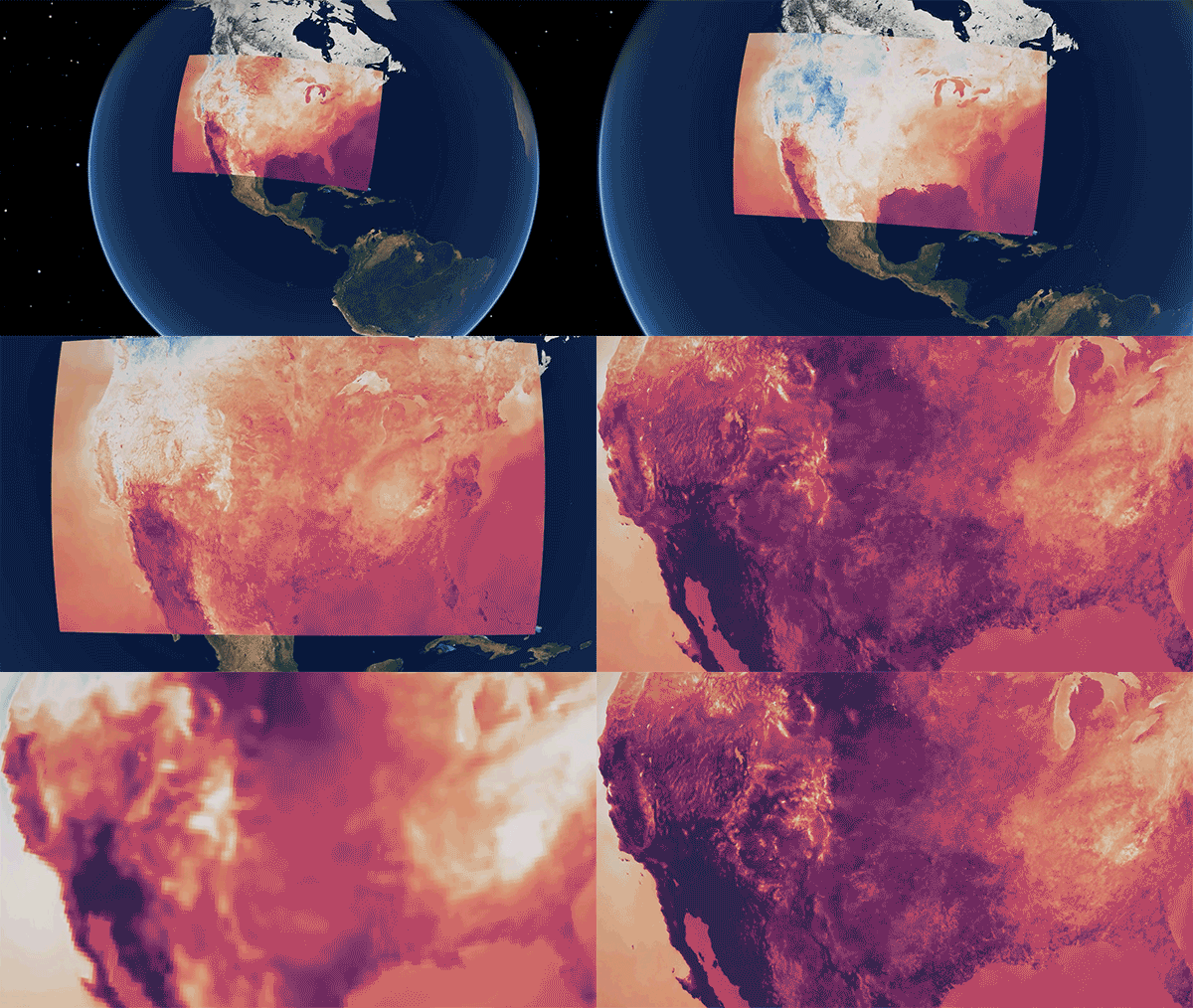
Adaptation planning needs regional climate that resolves a river basin, not a continent.
Three coupled bets on the future of forecasting.
Each piece is necessary. None is sufficient on its own. The models need the sensors. The sensors need the benchmarks. The benchmarks anchor the models back to ground truth.
A single conditional diffusion model fuses satellite radiances, radar, sparse stations, IoT — sampling a coherent atmospheric state in seconds. We treat assimilation itself as a generative problem.
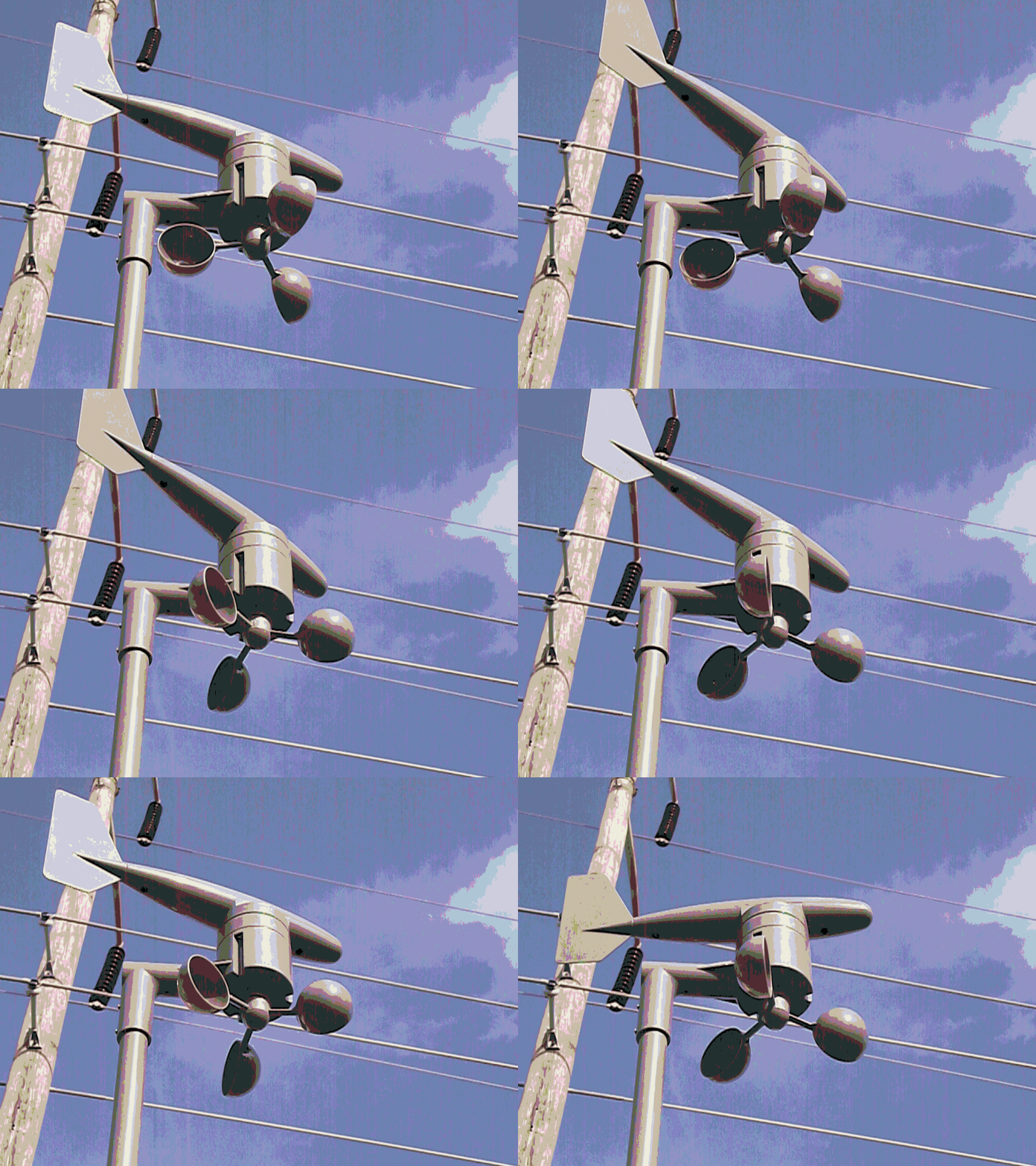
We deploy low-cost weather stations and disdrometers across the coverage gaps in India, sub-Saharan Africa, and the Andes — closing the data deficit at its source. Our models are only as good as what the world has measured.
The major AI weather benchmarks reflect mid-latitude conditions. Skill collapses on monsoon onset, ITCZ migration, Andean orography. We publish the first open suite focused on these phenomena — and evaluate ourselves on it publicly.
We are a growing team of scientists and engineers with deep roots at Stanford, MIT, Google, IBM, and NASA. We are building weather prediction systems for the three billion people — across India, Africa, and Latin America — whom current models systematically underserve.